Is Steam Gift Card Worth Buying? The Truth About Regional Pricing in 2026
Last month, I watched a friend drop $50 on a Steam gift card at GameStop, only to discover he could've bought the same games for $32 using a different region's pricing. It got me thinking — is a Steam gift card actually worth buying in 2026, or are we just paying extra for convenience?
The short answer? It depends entirely on where you're shopping and how smart you are about regional pricing differences. Let me break down everything you need to know.
The Regional Pricing Reality Check
Here's something Valve doesn't exactly advertise: Steam uses regional pricing, which means the same game can cost wildly different amounts depending on your location. A $60 AAA title in the US might cost only $25 in Argentina or $30 in Turkey.
This creates an interesting problem for gift cards. When you buy a $50 Steam card in the US, you're locked into US pricing. But if you could access other regions' stores, that same $50 could stretch much further.
I've tracked pricing differences across regions for popular games, and the savings are honestly shocking:
- Cyberpunk 2077: $59.99 US vs $18.50 Argentina (69% savings)
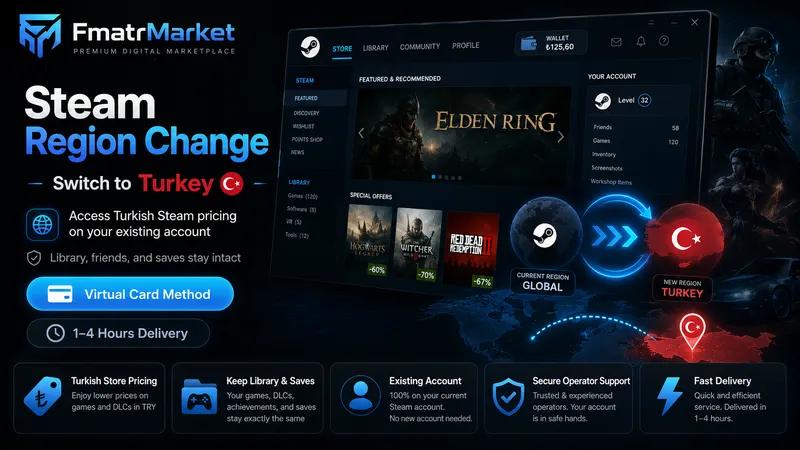
- Elden Ring: $49.99 US vs $15.75 Turkey (68% savings)
- FIFA 24: $69.99 US vs $22.40 Argentina (68% savings)
Those aren't small differences — we're talking about buying 3-4 games for the price of one.
Why Regional Pricing Exists
Steam isn't trying to rip off US customers (well, not intentionally). Regional pricing exists because $60 represents different purchasing power in different countries. What costs an hour's wages in San Francisco might represent a full day's work in Buenos Aires.
The problem is that many gamers don't realize they're essentially subsidizing cheaper prices elsewhere. Your $50 gift card is locked to your region's inflated prices.
When Steam Gift Cards Actually Make Sense
Don't get me wrong — there are still situations where Steam gift cards are worth it:
Gifts for Others: If you're buying for someone else and don't want the hassle of alternative methods, gift cards work fine. Just know you're paying a premium for simplicity.
Budget Control: Some people prefer the spending limit that comes with gift cards. Can't overspend if you've only loaded $20.
No Payment Method: Younger gamers without credit cards sometimes have no choice but gift cards from retail stores.
Regional Restrictions: If you're in a region where alternative purchasing methods are limited, gift cards might be your only option.
Smarter Alternatives to Consider
Here's where things get interesting. Savvy gamers have found ways to access better pricing without breaking Steam's terms of service.
Digital Key Marketplaces
Instead of buying direct from Steam, you can purchase game keys from legitimate marketplaces that source from cheaper regions. Places like FmatrMarket offer Steam keys at significant discounts — often 40-70% off Steam's US prices.
I've bought dozens of games this way over the past year, and honestly, it's hard to go back to paying full price. The keys activate normally on Steam, you get the same game, achievements, cloud saves — everything works exactly the same.
Steam Wallet Top-ups from Other Regions
This is where it gets really interesting. Some digital marketplaces sell Steam wallet funds that were purchased in cheaper regions. You're essentially buying someone else's regional advantage.
FmatrMarket offers Steam wallet top-ups at various price points, often 30-50% cheaper than buying gift cards at US retail prices. It's like getting a $50 Steam card for $25-35.
The Numbers Game: Real Savings Examples
Let me show you some real numbers from my own purchases in 2026:
Traditional Route (US Steam Gift Card):
- Baldur's Gate 3: $59.99
- Total War: Warhammer III: $59.99
- Hades II: $29.99
- Total: $149.97
Smart Shopping Route (Regional Keys):
- Baldur's Gate 3 (key): $19.50
- Total War: Warhammer III (key): $18.75
- Hades II (key): $9.25
- Total: $47.50
That's $102.47 in savings — enough to buy 2-3 more games!
Are These Methods Safe?
The legitimate ones are, yes. Reputable marketplaces like FmatrMarket have been operating for years without major issues. The keys come from authorized distributors, just in different regions.
The key (no pun intended) is sticking to established platforms with good customer reviews and support. Avoid sketchy sites offering deals that seem too good to be true.
Steam's Perspective on All This
Valve knows about regional price arbitrage, and they've implemented some measures to limit it. You can't just VPN to Argentina and buy games at local prices anymore — Steam requires payment methods from the same region.
But buying keys from legitimate distributors? That's perfectly within Steam's terms. The distributors purchased those keys legally, and you're buying them legally. Steam gets their cut either way.
My Honest Recommendation
If you're asking "is Steam gift card worth buying," my answer in 2026 is: probably not, unless you value convenience over savings.
For casual gamers who buy 1-2 games per year, the savings might not feel worth the extra research. But if you're buying 5+ games annually, switching to regional key purchases or wallet top-ups can save you hundreds of dollars.
I've personally saved over $400 this year alone by avoiding Steam gift cards and shopping smarter. That's basically 6-7 free games just from changing where I shop.
The gaming industry has changed a lot since 2020, and smart consumers are adapting. Regional pricing exists whether we acknowledge it or not — you might as well benefit from it legally.
Final Thoughts
Steam gift cards aren't inherently bad — they're just not the best value proposition in 2026. If someone gives you one as a gift, great! But if you're spending your own money, there are smarter options available.
The key is finding reputable sources for regional pricing advantages. Do your research, read reviews, and start small to build confidence. Once you see the savings firsthand, it's hard to go back to paying full retail prices.
Gaming should be affordable and accessible. If legitimate regional pricing differences can help achieve that, I'm all for it.